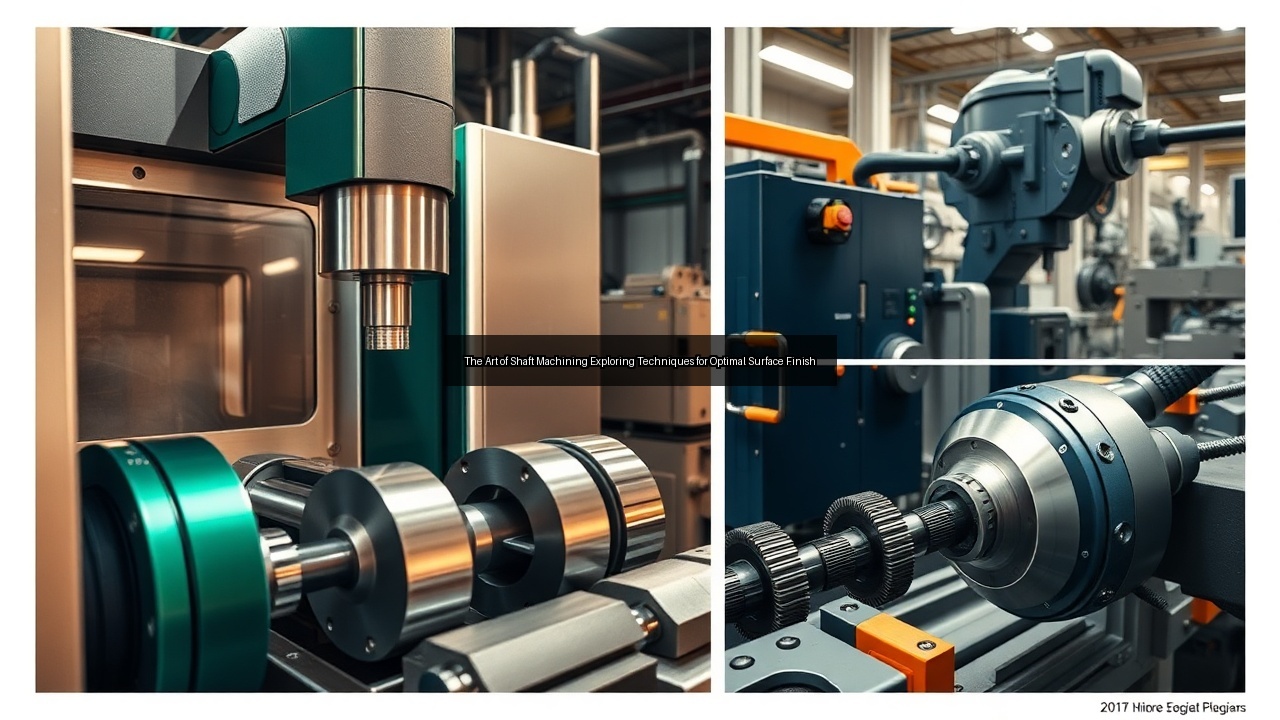
The Art of Shaft Machining Exploring Techniques for Optimal Surface Finish
Understanding Shaft Machining
Overview of Shaft Machining
Shaft machining forms the backbone of precision engineering in industries like automotive, aerospace, and machinery. Engineers start by turning raw materials into cylindrical components that transmit torque and support rotational motion. This process involves cutting, shaping, and refining shafts to meet exact specifications for diameter, length, and shape. Drilling, milling, and threading operations create features such as keyways, splines, or countershafts essential for drive shafts in transmission systems. CNC machines dominate modern shaft machining, enabling high accuracy and repeatability. For instance, CNC turning shapes the outer profile while CNC milling adds complex geometries. Precision shaft machining services ensure components withstand stress concentration and deflection under load. Manufacturers focus on minimizing tool wear during operations to maintain quality. Shaft design principles guide the entire workflow, balancing complexity with manufacturability. Applications range from motor shafts in electric vehicles to heavy-duty shafts in industrial pumps, where every machined shaft must align perfectly for optimal performance.
In custom shaft machining, clients specify details like material and tolerances upfront. Machining services providers use advanced software to simulate the shaft machining process, reducing errors and lead times. This overview highlights how shaft machining integrates multiple techniques to produce reliable parts that drive mechanical systems efficiently.
Importance of Surface Finish in Shaft Production
Surface finish dictates the longevity and efficiency of machined shafts in demanding environments. A smooth surface reduces friction, preventing premature wear in rotating parts like drive shafts or countershafts. Engineers measure surface finish in roughness average (Ra) values, aiming for low microns to enhance lubrication retention and minimize heat buildup from thermal expansion. In shaft manufacturing, poor surface finish leads to increased vibration, noise, and failure in transmission applications. Optimal polishing and grinding achieve this by removing microscopic imperfections from milling or turning operations. For precision shaft machining, surface finish directly impacts torque transmission and overall durability. Components like splined shafts benefit immensely, as fine finishes reduce stress concentrations at spline roots.
Machinists prioritize surface finish during the final stages of shaft machining services to meet stringent specifications. In high-speed motors, a superior finish cuts energy loss and extends maintenance intervals. Quality assurance checks verify that the surface meets design for manufacturing standards, ensuring shafts perform reliably across cycles. This focus not only boosts product quality but also lowers long-term costs for end-users in automotive and industrial sectors.
Common Materials Used in Shaft Machining
Steel dominates shaft machining due to its strength and machinability, with carbon steel offering cost-effective options for general-purpose shafts. Stainless steel provides corrosion resistance, ideal for shafts in harsh environments like marine transmissions. Alloy steel, infused with elements like nickel, enhances hardness and fatigue resistance for high-torque applications. Aluminum suits lightweight shafts in aerospace, where reduced weight improves fuel efficiency without sacrificing structural integrity. During material selection, machinists consider factors like thermal expansion and compatibility with heat treatment processes.
In CNC shaft machining, these materials shape easily on CNC turning and milling machines. For example, aluminum shafts undergo anodizing for added surface protection, while steel shafts often receive threading for secure connections. Machined shafts from these materials vary in cost based on alloy complexity and required tolerances. Manufacturers balance durability with ease of machining; steel's prevalence stems from its ability to handle drilling and shaping without excessive tool wear. Splined or geared shafts in alloy steel excel in power transmission systems, enduring repeated stress. Overall, selecting the right material ensures shafts meet performance demands in diverse applications, from prototypes to production runs.
Techniques for Achieving Optimal Surface Finish
Grinding Techniques for Precision
Grinding stands as a cornerstone technique in shaft machining, delivering unparalleled precision for surface finish. Operators use cylindrical grinders to rotate shafts against abrasive wheels, removing minute material layers to achieve tight tolerances on diameter and length. This method excels in refining machined shafts post-milling or turning, smoothing out irregularities for Ra values below 0.4 microns. In precision shaft machining, centerless grinding supports long shafts without axial support, minimizing deflection and ensuring uniform shape. Wet grinding incorporates coolant to control heat, preventing thermal expansion that could warp geometries.
Engineers select grinding wheels based on material—diamond for hardened steel, aluminum oxide for softer alloys. This technique addresses stress concentrations in splined shafts, enhancing durability. Shaft machining services integrate grinding into the workflow for components like motor shafts, where exact surface finish reduces friction in bearings. Tool wear remains low with proper dressing, allowing high-volume production. Grinding not only improves aesthetics but also functional performance, making it indispensable for high-torque transmission parts.
CNC Machining Methods for Enhanced Accuracy
CNC machining revolutionizes shaft production with methods that guarantee enhanced accuracy and repeatability. CNC turning lathes grip the shaft blank and use programmable tools for precise diameter reductions and threading. Multi-axis CNC milling machines carve complex shapes like keyways or splines on countershafts, maintaining tolerances as tight as ±0.001 inches. In CNC shaft machining, software-driven controls optimize tool paths, reducing cycle times while preserving surface integrity. Dry machining suits aluminum shafts, while flood coolant aids steel for heat dissipation.
Machined shafts emerge with superior geometry, crucial for applications in drive systems where misalignment causes failure. CNC machines handle varying lengths and diameters seamlessly, from small prototypes to large industrial shafts. Precision in CNC turning minimizes runout, ensuring smooth rotation in motors. Machining services leverage these methods for custom shaft machining, incorporating features like drilling for oil passages. Accuracy boosts overall quality, cutting scrap rates and enabling design for manufacturing innovations. This approach dominates modern shaft machining, delivering parts that meet rigorous specifications efficiently.
Polishing Processes and Their Benefits
Polishing refines shaft surfaces to mirror-like finishes, elevating performance in precision applications. Electrochemical polishing removes a thin layer uniformly, ideal for stainless steel shafts resistant to pitting. Mechanical polishing employs buffing wheels with compounds to smooth milled or ground surfaces, reducing roughness for better lubricant adhesion. In shaft machining, this process follows grinding, targeting areas like splined sections to eliminate micro-peaks that harbor contaminants.
Benefits include extended durability by lowering friction and wear in transmission components. Polished drive shafts exhibit less vibration, improving energy efficiency in electric motors. For alloy steel shafts, polishing enhances corrosion resistance, especially post-heat treatment. Custom shaft machining services apply lapping for ultra-fine finishes on high-speed parts, achieving sub-micron tolerances. This technique also aids inspection by revealing surface defects early. Overall, polishing integrates seamlessly into the workflow, ensuring machined shafts deliver optimal torque and longevity while minimizing maintenance needs.
Key Considerations in Shaft Design and Manufacturing
Material Selection: Steel, Aluminum, and Alloys
Material selection drives successful shaft design, with steel providing robust strength for heavy-load applications. Carbon steel offers affordability and ease in machining, perfect for standard machined shafts in machinery. Stainless steel resists rust, suiting shafts in food processing or marine environments. Aluminum lightens components for automotive drive shafts, cutting weight to boost fuel economy. Alloys, blending steel with nickel or chromium, tailor properties like hardness for high-torque countershafts.
In shaft manufacturing, machinists evaluate cost against performance; aluminum's lower density reduces inertia but demands tighter tolerances due to thermal expansion. Alloy steel withstands heat treatment, enhancing fatigue life in splined shafts. Design for manufacturing principles guide choices, ensuring compatibility with CNC turning and milling. For prototypes, versatile materials like aluminum allow quick iterations. This strategic selection balances durability, machinability, and application needs, optimizing shafts for transmission systems and beyond.
Tolerances and Specifications for Different Applications
Tolerances define shaft machining success, specifying allowable deviations in diameter, length, and shape for flawless assembly. In automotive transmissions, shafts require tolerances of ±0.005 mm to prevent binding in gears. Aerospace applications demand even tighter specs, like IT5 grades, to handle high-speed rotations without deflection. Specifications outline surface finish, hardness, and geometry, ensuring compatibility with mating parts like bearings.
Machinists use gauges during CNC shaft machining to verify dimensions, adjusting for material variations. Custom shaft machining tailors tolerances to client needs—looser for cost-sensitive prototypes, stricter for precision instruments. Threading and drilling features must align within specs to avoid stress concentrations. Quality assurance enforces these standards, reducing rework. For motor shafts, balanced tolerances minimize vibration, extending service life. This precision in specifications elevates machined shafts' reliability across industries.
Impact of Geometry on Performance and Durability
Geometry shapes shaft performance, with diameter influencing torque capacity and length affecting deflection under load. Thicker diameters resist bending in drive shafts, while stepped geometries accommodate varying stresses in countershafts. Splined or keyed shapes ensure secure power transmission, but complex profiles increase manufacturing complexity and potential failure points.
In shaft design, engineers model geometry to optimize strength-to-weight ratios, using finite element analysis for stress prediction. Machined shafts with uniform shapes endure cyclic loads better, vital for industrial motors. Geometry impacts thermal expansion; elongated shafts need allowances to prevent binding. Polishing curved sections enhances durability by smoothing transitions. For custom applications, geometry aligns with system requirements, like helical splines for high-ratio transmissions. Proper design mitigates issues like tool wear during machining, yielding durable components that maintain efficiency over time.
Workflow and Process Control in Shaft Machining
Machinery and Tools Used in Shaft Machining
Machinery powers shaft machining, with CNC lathes forming the core for turning operations on cylindrical blanks. Multi-axis CNC mills add precision features like milling slots or drilling holes for lubrication. Grinding machines refine surfaces, while threading tools create secure connections on steel shafts. In custom shaft machining, automated systems integrate these for seamless workflow.
Tools include carbide inserts for high-speed cutting on aluminum, reducing tool wear. Coordinate measuring machines (CMMs) support process control by inspecting tolerances mid-production. Shaft machining services rely on versatile CNC machines to handle shapes from simple rods to complex splined designs. Coolant systems manage heat during extended runs, preserving accuracy. This equipment lineup ensures machined shafts meet specifications, from prototype development to mass manufacturing, enhancing overall efficiency and quality.
Heat Treatment and Its Role in Strengthening
Heat treatment transforms raw machined shafts into resilient components, hardening steel through quenching and tempering to boost tensile strength. For alloy steel, carburizing adds surface carbon, improving wear resistance in torque-heavy drive shafts. Aluminum shafts undergo solution treatment to refine grain structure, enhancing fatigue life without adding weight.
In the shaft machining process, heat treatment follows rough machining to avoid distortion, with controlled cooling minimizing residual stresses. This step addresses thermal expansion effects, ensuring dimensional stability. Stainless steel benefits from annealing to restore ductility post-machining. Quality assurance verifies hardness levels, like Rockwell scales, for durability. Heat treatment elevates machined shafts' performance in transmissions, reducing deflection and extending maintenance cycles. Integrated into workflow, it balances machinability with end-use demands.
Quality Assurance and Inspection Techniques
Quality assurance safeguards shaft machining integrity through rigorous inspection techniques. Visual checks detect surface defects, while CMMs measure diameters and lengths to tolerances. Ultrasonic testing reveals internal flaws in steel shafts, preventing failures in high-stress applications. In CNC shaft machining, in-process gauging monitors accuracy during turning and milling.
Non-destructive methods like magnetic particle inspection identify cracks in splined areas. Documentation tracks each machined shaft's specs, aiding traceability in manufacturing services. For custom prototypes, statistical process control analyzes variations to refine workflows. These techniques ensure surface finish and geometry meet standards, minimizing defects. Dimensional inspections confirm shape compliance, boosting reliability in motors and transmissions. Robust QA elevates precision shaft machining, delivering durable products that satisfy client specifications consistently.
Future Trends and Innovations in Shaft Machining
Advancements in CNC Technologies
Advancements in CNC technologies propel shaft machining toward unprecedented precision and speed. Hybrid CNC machines combine turning, milling, and grinding in one setup, slashing production times for complex machined shafts. AI-driven software predicts tool wear, optimizing paths for stainless steel and alloys. In CNC shaft machining, 5-axis capabilities enable intricate geometries like helical splines without multiple fixtures.
Digital twins simulate entire workflows, forecasting issues like thermal expansion in long shafts. Additive manufacturing hybrids deposit material for prototypes, followed by CNC finishing. These innovations reduce costs and lead times in custom shaft machining services. Enhanced sensors provide real-time feedback, ensuring tolerances in high-volume runs. Future CNC systems promise adaptive controls for varying materials, revolutionizing drive shaft production and transmission efficiency.
Custom Shaft Machining and Prototype Development
Custom shaft machining meets unique demands, starting with prototype development to validate designs. Rapid prototyping uses CNC turning for quick iterations on aluminum or steel blanks, incorporating features like threading and keyways. Engineers collaborate via digital communication to refine specs, ensuring manufacturability from the outset.
In shaft manufacturing, 3D printing aids initial shapes, with CNC machining adding precision tolerances. This approach accelerates development for applications like electric motor shafts, testing torque and deflection early. Samples undergo rigorous inspection to confirm surface finish and durability. Custom services scale from one-off prototypes to series production, balancing complexity with cost. Innovations in software streamline design for manufacturing, enabling splined or countershaft prototypes that perform reliably. This agile process fosters innovation in transmission systems and beyond.
Sustainable Practices in Shaft Manufacturing
Sustainable practices reshape shaft manufacturing, prioritizing eco-friendly materials and processes. Recycled steel and aluminum reduce environmental impact while maintaining strength for machined shafts. Dry machining eliminates coolants, cutting waste in CNC operations. Energy-efficient CNC machines lower consumption during turning and milling of drive shafts.
Heat treatment advances use induction methods for precise, low-emission hardening. Lifecycle assessments guide material selection, favoring alloys with minimal nickel for reduced mining strain. In custom shaft machining, modular designs extend part life, decreasing replacement needs. Quality assurance incorporates sustainability metrics, like recyclable tooling. These practices enhance durability without compromising performance, appealing to green-focused industries. Shaft machining services adopt closed-loop systems for scrap reuse, promoting a circular economy in transmission and motor production.
See Also
- Understanding Tolerances and Specifications in CNC Shaft Machining
- From Design to Delivery The Complete Workflow of Custom Shaft Machining
- Maximizing Cost Efficiency in Shaft Machining without Compromising Quality
- Unlocking Precision in Shaft Machining for High-Performance Manufacturing
- Innovative Materials for Machining High-Quality Shafts in Modern Manufacturing