Unlocking the Power of Track Welders for Seamless Connections
Understanding Track Welders and Their Importance
The Role of Track Welders in Modern Welding
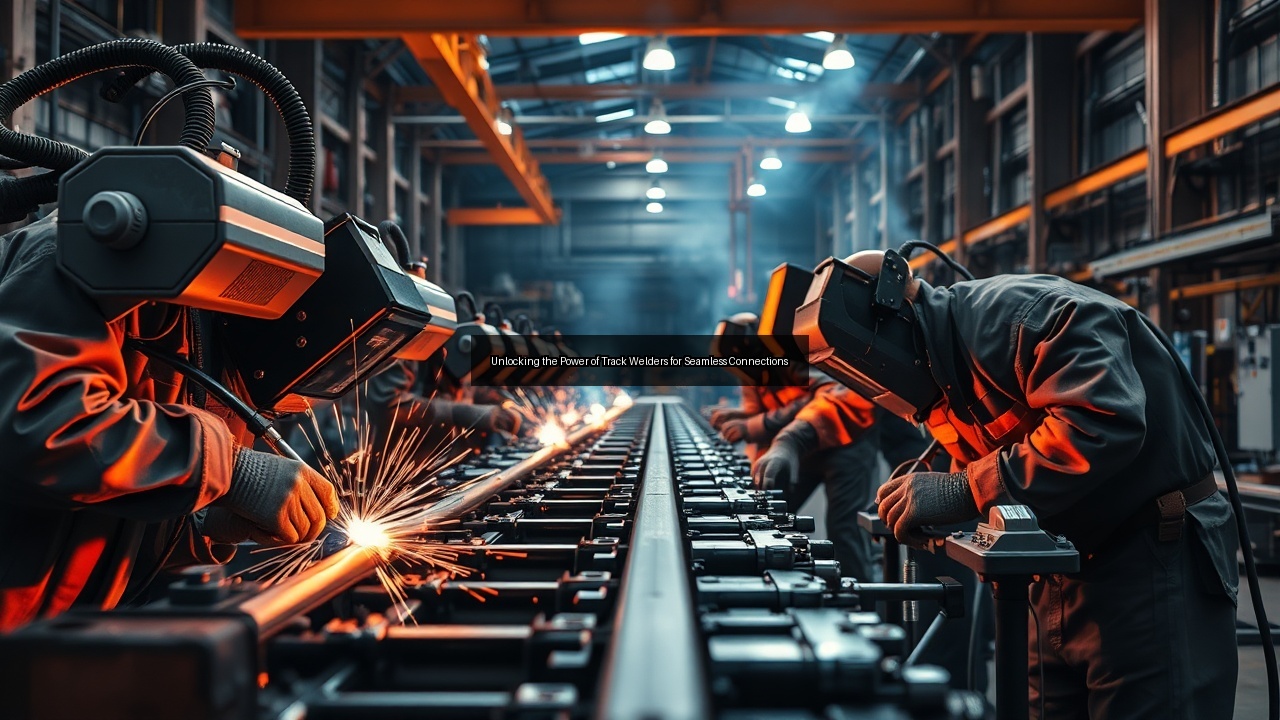
Track welders deliver precise, continuous welds along linear paths in demanding industrial settings. Professionals rely on these machines for railway tracks, structural beams, and heavy equipment repairs where consistent seam quality prevents failures. A track welder moves steadily over the workpiece and maintains uniform heat input that manual methods often miss. This approach reduces distortion and creates stronger joints that withstand vibration and load stress. Industries such as shipbuilding and pipeline construction now integrate track welders into daily workflows because the equipment boosts productivity while cutting rework. Welders appreciate the reduced physical strain compared with handheld torches, and project managers note faster completion times on long seams. Track welding also supports automation upgrades that allow one operator to oversee multiple stations simultaneously. The result is reliable performance across large-scale fabrication projects that require exact alignment and repeatable results every shift.
Components of a Track Welding Machine
A track welding machine combines a motorized carriage, control panel, power source, and torch assembly into one coordinated system. The carriage rides on a rigid track that clamps directly to the workpiece or runs on a separate rail. Drive motors provide smooth travel at variable speeds, while the oscillator attachment adds lateral weave motion for wider weld beads. Power supplies deliver stable amperage to electrodes or wire feeders mounted on the head. Operators adjust parameters through digital interfaces that store job presets for quick changeovers. Additional modules include flux recovery units and seam trackers that correct minor deviations in real time. Gullco International supplies many of these integrated components, allowing fabricators to scale from basic setups to fully automated lines. Proper component selection ensures the entire assembly handles different material thicknesses without frequent recalibration. Maintenance teams inspect bearings, drive belts, and electrical connections regularly to keep machines running at peak output.
Advantages of Using Track Welders in Various Applications
Track welders produce uniform penetration and consistent bead profiles that manual techniques struggle to match on extended joints. Fabricators report lower consumable usage because the controlled travel speed prevents overheating and excess spatter. In bridge construction and rail maintenance, these machines create seamless connections that pass strict ultrasonic inspections on the first attempt. Safety improves when operators stand clear of the arc while the machine handles the weld path. Versatility shows when the same unit switches between flat, horizontal, and vertical positions with minimal setup changes. Companies that adopt track welding equipment often see throughput gains of twenty to thirty percent on repetitive seams. The equipment also supports multi-pass techniques on thick sections without repositioning the operator each layer. Overall, track welders lower total project costs through reduced labor hours and fewer defects that require grinding or rewelding.
Types of Track Welding Machines
Overview of Track Welding Equipment
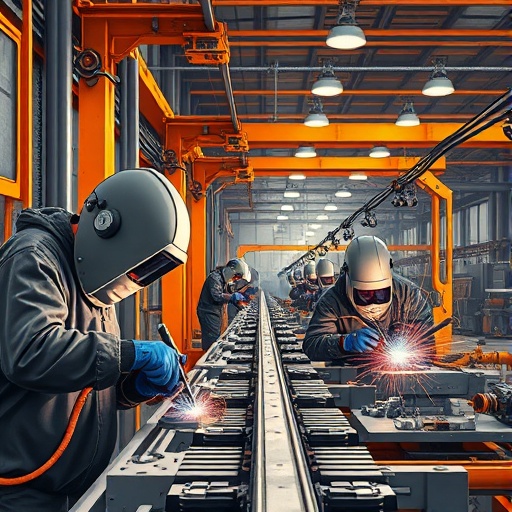
Track welding equipment ranges from portable units for field repairs to heavy-duty systems installed in fabrication shops. Portable models clamp onto existing structures and run on battery or generator power for remote rail or pipeline work. Stationary machines mount on fixed beams and handle high-volume production of pressure vessels or ship hulls. Many systems accept interchangeable heads for submerged arc, gas metal arc, or flux-cored processes. Manufacturers design the tracks themselves from lightweight aluminum or durable steel to match job requirements. Integrated sensors monitor travel speed, voltage, and wire feed to maintain quality standards across shifts. Operators can expand basic machines with add-on modules such as automatic height control or data logging for traceability. This modular approach lets businesses match equipment capability to current contracts while leaving room for future growth.
Comparing Manual vs. Automatic Track Welders
Manual track welders require an operator to guide the carriage and adjust parameters during the weld. These units suit short runs or jobs with frequent material changes where full automation adds unnecessary complexity. Automatic track welders follow programmed paths and maintain constant settings once started, freeing the operator to prepare the next joint or inspect completed work. Automatic models excel on long, straight seams where consistency matters most. They reduce human error from fatigue and deliver repeatable results that meet code requirements without variation. However, manual versions remain popular for tight access areas where rigid tracks cannot fit. Many shops keep both types available so crews can choose the best tool for each task. Hybrid machines now combine manual override with automatic modes, giving operators flexibility without sacrificing productivity.
Key Features of Advanced Track Welding Machines
Advanced track welding machines incorporate digital controls, programmable oscillators, and real-time monitoring that older models lack. Touchscreen interfaces let users store hundreds of weld schedules and recall them instantly. Oscillation width, dwell time, and travel speed adjust independently to optimize each pass. Some units include laser seam tracking that corrects deviations automatically during welding. Remote diagnostics allow service teams to troubleshoot issues without on-site visits, minimizing downtime. Integrated wire feeders handle both solid and flux-cored wire with precise tension control. Gullco designs emphasize rugged construction that withstands harsh environments while delivering precise motion. Safety features such as arc flash shields and emergency stops protect personnel around the active weld zone. These capabilities translate into higher first-pass yield rates and lower overall operating costs across demanding applications.
The Welding Process: Techniques and Materials
Choosing the Right Electrodes for Track Welding
Electrode selection directly affects weld strength and appearance in track welding applications. Operators match electrode diameter and coating type to base metal thickness and joint configuration. Low-hydrogen electrodes reduce cracking risk on high-strength steels common in rail and structural work. Flux-cored wires offer higher deposition rates when welding outdoors where wind can disrupt shielding gas. Proper storage and handling prevent moisture absorption that leads to porosity. Trial welds on sample coupons confirm settings before production begins. Track welders benefit from consistent electrode feed because the machine maintains steady travel speed. Fabricators often standardize on one or two electrode types to simplify inventory and training. Correct choice of electrodes improves fusion and reduces post-weld cleaning time, supporting higher daily output without sacrificing quality.
The Significance of Oscillation in Welding
Oscillation expands the weld pool laterally to bridge gaps and improve sidewall fusion on wider joints. An oscillator mounted on the track welder head moves the torch side to side in controlled patterns. Adjustable parameters include weave width, frequency, and dwell at each edge. Proper oscillation prevents undercut and creates flatter beads that require less grinding. In multi-pass welds, oscillation helps each layer tie into the previous one without trapping slag. Operators fine-tune settings based on material type and joint preparation to achieve optimal results. Advanced machines store oscillation profiles alongside travel speed and amperage for repeatable performance. Consistent oscillation also distributes heat evenly, lowering distortion on thin sections. This technique proves especially valuable when welding connecting rod assemblies or large fabricated frames where straight stringer beads fall short.
Using Ceramic Wire for Optimal Results
Ceramic wire serves as a backing material that supports the weld pool during root passes on open joints. The wire sits beneath the seam and melts partially to form a smooth underside without requiring a permanent backing bar. Track welders advance steadily over the ceramic wire while the arc melts both base metal and filler. After welding, the ceramic residue chips away cleanly, leaving a uniform root profile. This method reduces fit-up time and eliminates the need for back gouging on many applications. Proper wire diameter and composition ensure compatibility with the base metal and shielding gas. Shops that adopt ceramic wire report fewer defects at the root and faster overall cycle times. The technique pairs well with track welding equipment because the machine maintains constant speed and torch angle over long seams.
Maximizing Efficiency and Return on Investment
Cost Analysis of Track Welding Machines
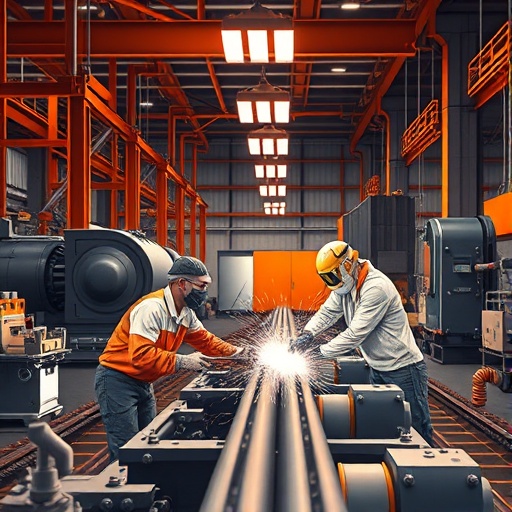
Initial purchase price for a track welding machine varies with capacity, automation level, and included accessories. Basic portable units start lower while fully featured automatic systems command higher investment. Operating costs include power consumption, consumables, and scheduled maintenance. Energy-efficient power sources reduce electricity bills during extended runs. Consumable savings arise from precise control that minimizes spatter and overwelding. Downtime costs drop when reliable machines complete jobs on schedule without repeated repairs. Buyers should calculate total cost of ownership over five to seven years rather than focusing only on upfront price. Financing options and leasing programs spread payments while the equipment generates revenue. Accurate cost analysis helps companies select the right track welder configuration that balances capability with budget constraints.
Factors Influencing the ROI of Track Welding Equipment
Return on investment improves when track welding equipment increases output and reduces labor hours per joint. Higher first-pass acceptance rates cut inspection and rework expenses that erode margins. Faster travel speeds allow more welds per shift without adding personnel. Reduced physical demands on welders lower turnover and associated training costs. Equipment that integrates with existing shop workflows avoids expensive infrastructure changes. Data logging features support quality documentation required by customers, opening doors to new contracts. Regular maintenance keeps machines productive and prevents costly breakdowns that halt production. Shops that track these metrics can demonstrate clear payback periods and justify future upgrades. Strong ROI ultimately depends on matching machine features to specific job requirements and maintaining disciplined operating practices.
Best Practices for Maintenance and Longevity of Welders
Daily inspections of drive wheels, tracks, and electrical connections catch wear before it causes failures. Lubrication of moving parts follows manufacturer schedules to maintain smooth carriage motion. Cleaning torch nozzles and wire feeders prevents contamination that affects arc stability. Calibration checks on oscillators and travel speed controls ensure consistent weld parameters. Spare parts inventory for common wear items reduces repair time when issues arise. Operators document performance data to spot gradual declines that indicate needed service. Training programs keep technicians current on troubleshooting procedures specific to track welding machines. Proper storage of machines in clean, dry environments protects electronics and mechanical components during off periods. These practices extend equipment life and protect the return on investment by keeping welders available for production whenever demand requires them.
See Also
- Understanding the Role of Oscillation in Track Welding Processes
- Innovative Applications of Track Welders Beyond Railways
- Choosing the Right Welding Machine for Efficient Track Repairs
- Essential Maintenance Tips for Your Track Welding Machines
- The Evolution of Track Welders from Manual to Automated Solutions